
Request a callback
If your garage door opener clicks but door doesn’t move, stop trying to run it. The motor may be working against a locked, disconnected, unbalanced, or jammed door. Check that the door is unlocked, reset power once, and look for clear damage. Don’t force the door or adjust springs, cables, or opener settings.

Start with the checks that don’t put you at risk
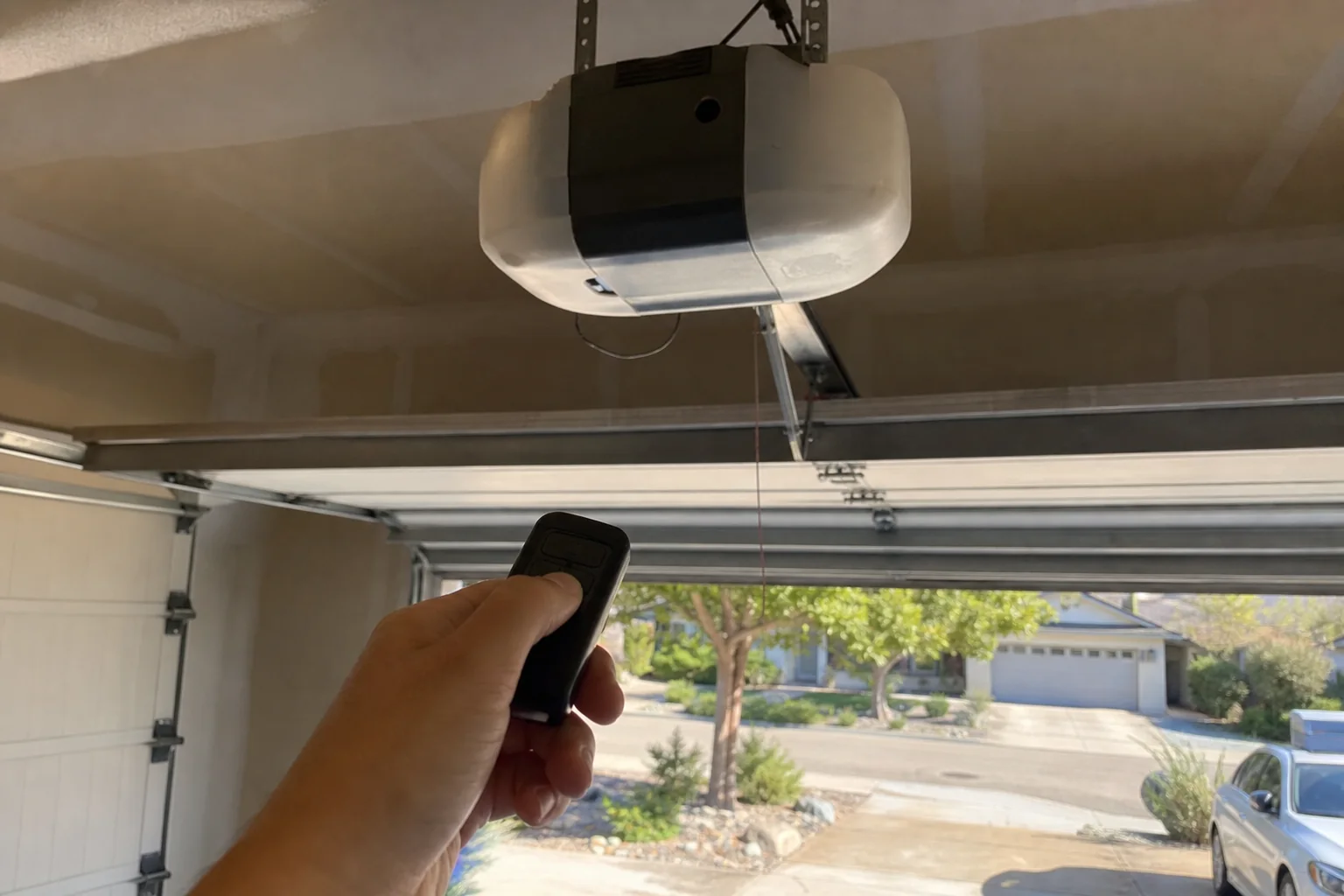
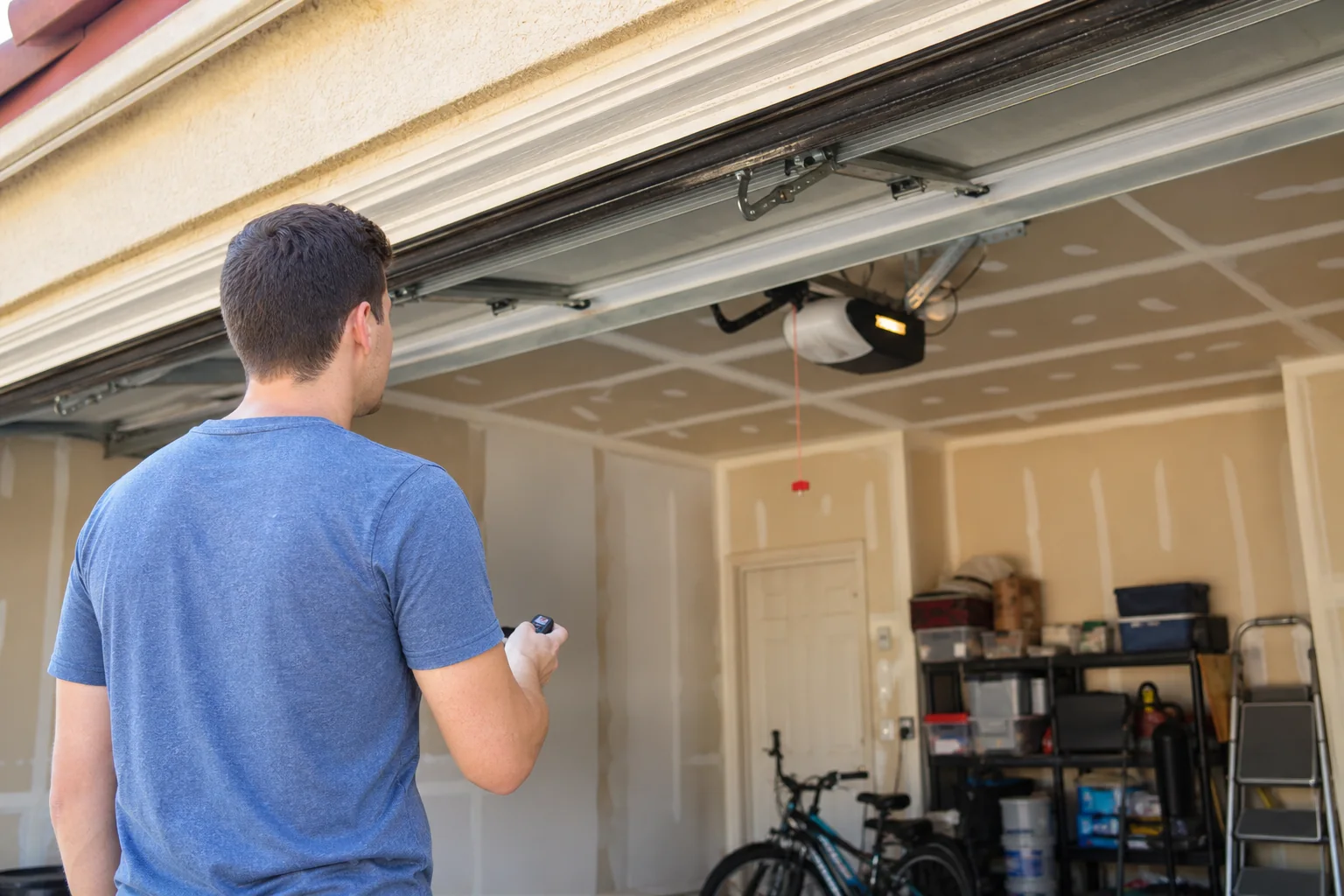
A noise from the opener tells you it received the command. It doesn’t prove the door can travel safely. A door that stays put can trap a car inside or leave the garage unsecured, so begin with a short visual check instead of repeated button presses.
- Stop the opener after one or two attempts. Repeated attempts can strain parts that are already stuck.
- Look at the lock. Make sure a manual slide lock on the inside of the door isn’t engaged. An engaged lock can stop the door while the opener tries to pull it.
- Check the outlet and reset power once. Confirm the opener is plugged in. Unplug it for a short time, plug it back in, then try the wall button once. Don’t keep cycling power if the noise continues.
- Look along the door and tracks. Stop and arrange service if the door is crooked, a cable is loose, a roller is out of its track, or a spring looks broken.
- Look at the opener rail. A trolley is the moving piece that connects the rail to the door arm. If it is clearly disconnected from the door arm or stopped at the end of the rail, don’t force it back into place while the opener runs.
What a click or hum can point to
The sound length and the door’s condition offer clues, but they can’t confirm the failed part. Chamberlain Group Support lists a broken spring, engaged door lock, or trolley stopped on a rail tab as possible reasons for a short hum without movement. Its guidance also lists a disconnected door, worn screw-drive rack, capacitor, motor, or control board as possible causes of a longer hum on relevant models.
The opener runs but the door stays still
The link between the opener and door may be disconnected. Many openers have an emergency release that separates the trolley from the drive. This can happen after someone pulls the release handle, during a power outage, or when the system is being checked. The opener can move along the rail while the door remains still.
A stripped internal drive part may also let the motor run without moving the trolley. The needed repair depends on the opener’s design. Chain, belt, screw-drive, and wall-mounted units don’t share the same parts or setup.
The opener clicks or hums and then stops
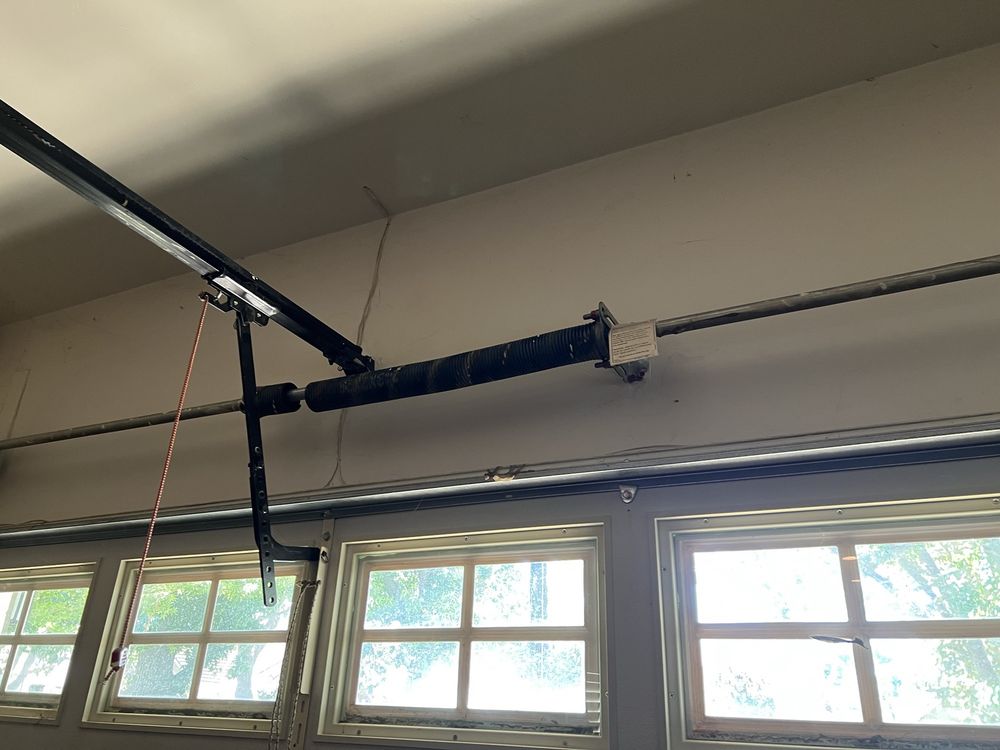
The door may be blocked, locked, or too heavy for the opener to lift. A broken spring is a serious possibility when a door suddenly feels heavy or will not rise. Springs carry much of the door’s weight. The opener is meant to move a balanced door, not lift its full weight.
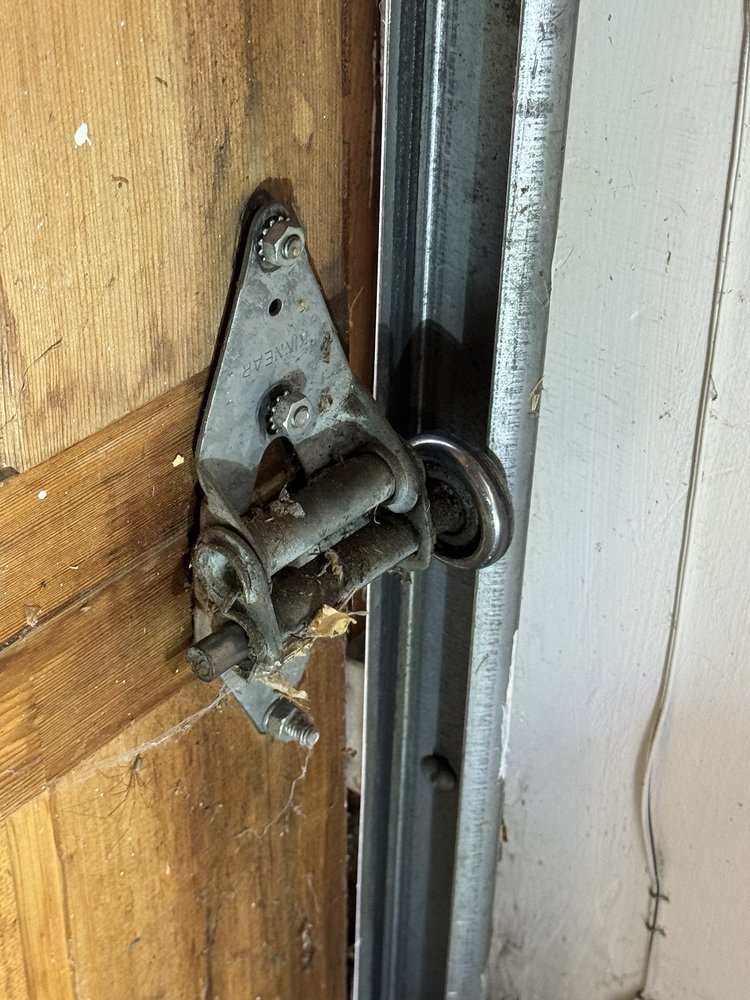
A bent track, damaged roller, loose cable, or door section that has shifted can also bind the door. These faults can get worse if the opener keeps pulling. Turn off the opener and leave the door where it is if you see any of these signs.
Decide whether the garage door itself needs service
Only test the door by hand if it is fully closed, the area is clear, and there is no visible broken spring, loose cable, bent track, or crooked door. Do not try this test when the door is open or partly open. It can fall.
After using the emergency release according to your opener manual, lift the closed door slowly from the bottom. Stop right away if it feels unusually heavy, catches, moves unevenly, or you hear scraping. Don’t try to muscle it open. Reconnect the opener only after the problem is found and corrected.
A balanced door should not need much force to lift. The DASMA safety and maintenance guide says a properly balanced door should stay partially open about 3 to 4 feet above the floor. A door that drops, rises on its own, or won’t stay in that area needs a trained door systems technician.
This check separates two different paths. If the door moves smoothly and feels balanced by hand, the opener connection, rail, drive, or motor may need attention. If the door is heavy or binds, address the door and spring system first. Running an opener on an unbalanced door can damage the opener.
Don’t make these adjustments while the cause is unknown
Some online fixes can create a bigger problem when the door is stuck. Leave these tasks to a trained technician.
- Do not loosen, wind, or replace torsion springs or extension springs.
- Do not remove or reset cables on the drums or bottom brackets.
- Do not increase opener force settings to make a heavy door lift.
- Do not change travel limits until the door moves freely and is properly connected.
- Do not open the motor housing to inspect electrical parts.
- Do not tighten a chain, belt, screw drive, or wall-mount collar without the model-specific instructions and a clear diagnosis.
Force and travel settings are meant for fine adjustment after a door operates correctly. They are not a cure for a lock, broken spring, damaged track, or worn opener part. Changing them first may let the door push against an obstruction or stop in the wrong place.
Prepare for an opener and door inspection
A few details can help make the visit more useful. Write down whether the opener makes a single click, a brief hum, or a longer running sound. Note whether the trolley moves, the lights flash, and whether the wall button and remote act the same way. Take a photo from a safe distance if you can see a loose cable, gap in a spring, or damaged track.
Also make room near the inside of the garage door and opener. Keep vehicles clear of the door path if possible. A technician may need to inspect the opener, rail, trolley, door balance, springs, cables, rollers, tracks, and safety system together. The motor is only one part of the system that moves the door.
For a garage door that clicks or hums without moving in San Jose or the Greater Bay Area, call Palms Garage Doors at (650) 600-6656 to schedule Garage Door Opener Service. A technician can check the opener and the door parts that may be stopping travel.
Garage door not working right now?
Call Palms Garage Doors. We are open 24/7.
Common questions about an opener that makes noise
Can I use the emergency release when the power is out?
Yes, if the door is fully closed and there is no sign of damage. Follow the release steps in your opener manual. Do not pull the release when the door is open or partly open because an unbalanced door can fall quickly.
Why does the wall button work but the remote does not?
That points toward the remote, its battery, programming, or signal path rather than the wall control. If the opener still clicks or hums but the door does not move when using the wall button, the door or opener drive still needs to be checked.
Can a garage door opener fail even if its light turns on?
Yes. The light circuit and door-moving parts are separate. An opener may power its lights while a worn drive part, motor part, rail connection, or control issue keeps the door from moving.
Should I leave a stuck garage door open overnight?
Don’t leave it open if you can avoid it. An open door can affect security and may be unsafe if the door is unstable. Keep clear of the opening and arrange help to assess a door that cannot close normally.
Sources
- Chamberlain Group Support (support.chamberlaingroup.com)
- DASMA safety and maintenance guide (dasma.com)
More from the Palms blog
Why Your Garage Door Opener Struggles on Cold Mornings and When It Is Time to Replace It
Read articleGarage Door Opener Replacement Signs Your Old Unit Is Failing
Read articleParts for a Garage Door Opener: What Fails, What to Replace, and When to Call the Pros
Read articleWhat our customers think about us
Live Google reviews, shown with our Trustindex widget.










Our awards and certifications


